
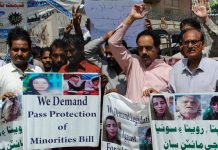


New Pakistan - Newstag:www.new-pakistan.com,2010:mephisto/newsMephisto Drax2010-03-10T15:27:48ZNew Pakistantag:www.new-pakistan.com,2010-03-10:11272010-03-10T14:40:00Z2010-03-10T15:27:48ZPresident Signs Historic Women's Rights Bill<p>The Americans do not have a monopoly on freedom and protection for women. This is the message from yesterday's historic event in Islamabad where <a href="http://www.dawn.com/wps/wcm/connect/dawn-content-library/dawn/news/pakistan/22-pakistan-outlaws-workplace-harassment-of-women-aj-02">President Zardari signed the Protection Against Harassment of Women at Workplace Bill</a> ensuring equal rights for men and women in accordance with the Constitution. This was an especially bold move by the President, who has taken a firm stand against religious parties, choosing instead to stand with the legacy of the Quaid.</p>
<p>The Americans do not have a monopoly on freedom and protection for women. This is the message from yesterday's historic event in Islamabad where <a href="http://www.dawn.com/wps/wcm/connect/dawn-content-library/dawn/news/pakistan/22-pakistan-outlaws-workplace-harassment-of-women-aj-02">President Zardari signed the Protection Against Harassment of Women at Workplace Bill</a> ensuring equal rights for men and women in accordance with the Constitution. This was an especially bold move by the President, who has taken a firm stand against religious parties, choosing instead to stand with the legacy of the Quaid.</p>
<p> </p>
<p><img src="../../../assets/2010/3/10/womens-rights-mainview.jpg" alt="" /></p>
<p>The Americans do not have a monopoly on freedom and protection for women. This is the message from yesterday's historic event in Islamabad where <a href="http://www.dawn.com/wps/wcm/connect/dawn-content-library/dawn/news/pakistan/22-pakistan-outlaws-workplace-harassment-of-women-aj-02">President Zardari signed the Protection Against Harassment of Women at Workplace Bill</a> ensuring equal rights for men and women in accordance with the Constitution. This was an especially bold move by the President, who has taken a firm stand against religious parties, choosing instead to stand with the legacy of the Quaid.</p>
<blockquote>
<p>“We have to create a Pakistan where the coming generations, my daughters, can be proud of the fact that they live as equals. We will make sure that those who wish to harm the ideology of the Quaid-i-Azam, which was for equality for men and women, shall not succeed,” he said.</p>
<p>The president, invoking the name of Benazir Bhutto, said: “We shall do our utmost by the end of this tenure. All the rights that we enjoy as men shall be enjoyed by women as well.”He recalled the commitment made by Ms Bhutto at the Beijing Conference and in the CEDAW (Convention on the Elimination of All Forms of Discrimination against Women, adopted in 1979 by the UN General Assembly) document, and urged the government to seek guidance from her vision to achieve gender equality.Mr Zardari recalled the struggle and sacrifices of Benazir Bhutto and said she was a symbol of strength, bravery and courage. “My wife was much stronger than me. She left a legacy for us to follow even she is guiding us from her grave.”</p>
</blockquote>
<p>This bold move comes during a time when more and more Pakistani women are breaking down old social barriers and serving their country and commnunities in new ways. Earlier this week, <em>Dawn</em> reported about two women - Ambreen and Nadia - <a href="http://www.dawn.com/wps/wcm/connect/dawn-content-library/dawn/news/pakistan/07-Sky-is-the-limit-for-Pakistan-s-women-fighter-pilots-ha-09">two of Pakistan's first women fighter pilots</a>.</p>
<p>Just last month, <a href="http://www.dawn.com/wps/wcm/connect/dawn-content-library/dawn/news/sport/07-pakistan-s-naseem-becomes-fastest-woman-in-south-asia-ha-03">Naseem Hameed created history by becoming the fastest women in South Asia</a> when the 22-year-old from Rawalpindi won the gold at the South Asia Games.</p>
<p>Despite these exemplary examples, however, <a href="http://www.dawn.com/wps/wcm/connect/dawn-content-library/dawn/the-newspaper/editorial/16-womens-disenfranchisement-hs-03">Pakistani women continue to face harrassment and discrimination</a>. Ironically, much of this comes from religious parties even though the Sunnah teaches that women are equal to men. Actually, Khadija was the Prophet's (PBUH) partner - not his servant - and their marriage was characterized by love, respect, and cooperation. In fact, when Angel Jabriel first appeared to the Prophet (PBUH), he was very shaken and returned to Khadijah and asked for her advice.</p>
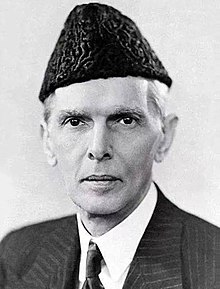
<p>The Sunnah is filled with references to reverence and respect for the equal status of women, but so is the history of Pakistan. In fact, unlike many Western nations, women have been legally able to vote in Pakistan since it was founded in 1947. Also, there is the exemplary tradition of the family of Quaid-e-Azam Muhammad Ali Jinnah.</p>
<p><img src="../../../assets/2010/2/4/jinnah-family.jpg" alt="" /></p>
<p>President Zardari has also <a href="http://www.dawn.com/wps/wcm/connect/dawn-content-library/dawn/news/pakistan/22-pakistan-outlaws-workplace-harassment-of-women-aj-02">a strong tradition of service among the women in his family</a>.</p>
<blockquote>
<p>The president said both his sisters were members of parliament, while her two daughters would be back after completing their studies to serve the nation, along with their brother.</p>
<p>He paid rich tribute to the women who over the generations had strived for their rights since long and described them as “really a tribute to God’s divine creation.”</p>
<p>He also lauded the role of women which they played in history and said all religions accord them due regard, dignity and honour.</p>
<p>“Let us mobilise the collective power of women to help make our country, the region and the world more tolerant and secure for all,” he said.</p>
</blockquote>
<p>Women's organizations in Pakistan have praised the historic passage of the bill.</p>
<blockquote>
<p>The Alliance Against Sexual Harassment (Aasha), a civil society organisation, which has been working on the issue, has described the signing of the bill a milestone for women.</p>
<p>Aqsa Khan of Aasha said: “This is a true partnership of citizens and the government. We want the government to ensure its implementation.”</p>
<p>She said: “Pakistan now stands as a leading country in South Asia for having a specific legislation against sexual harassment at workplace.”</p>
<p>Dr Fouzia Saeed, a woman activist who remained engaged with the process for two years, said: “The government has honoured its commitment for a progressive social legislation. This is a breakthrough and we expect continued support to other such laws to make society more civilised and accountable.”</p>
<p>She said in a statement that women activists were thankful to Shahnaz Wazir Ali, Sherry Rehman, Raza Rabbani, Senate Chairman Farooq H. Naek and senior leadership of the PPP. She said they were also very proud of members of the Awami National Party, the Muttahida Qaumi Movement and many progressive parliamentarians of the Pakistan Muslim League-Q and the PML-N.</p>
</blockquote>
<p>More than a symbolic gesture, President Zardari has called on all ministries to enact the code within one month, and has encouraged private sector companies also to cooperate in the implementation. All organisations, including federal and provincial government ministries, departments, corporations, educational institutions, private commercial organisations and registered civil society associations, will be required to constitute inquiry committees of at least three members each – one of them a woman – to probe complaints and give their findings within 30 days to the competent authority concerned that will award recommended penalties.</p>
New Pakistantag:www.new-pakistan.com,2010-03-08:11152010-03-08T15:11:00Z2010-03-09T14:16:22ZThe Right-Wing Is Selling, But People Don't Want To Buy<p>In case you missed <a href="http://www.dawn.com/wps/wcm/connect/dawn-content-library/dawn/the-newspaper/columnists/nadeem-f-paracha-realpolitik-730">Nadeem Paracha's column in <em>Dawn</em> yesterday</a>, take a moment to read it, please. Nadeem makes an excellent point about the recently concluded election in NA-55 and what this <em>really</em> says about what politics really resonates with the people.</p>
<p>In case you missed <a href="http://www.dawn.com/wps/wcm/connect/dawn-content-library/dawn/the-newspaper/columnists/nadeem-f-paracha-realpolitik-730">Nadeem Paracha's column in <em>Dawn</em> yesterday</a>, take a moment to read it, please. Nadeem makes an excellent point about the recently concluded election in NA-55 and what this <em>really</em> says about what politics really resonates with the people.</p>
<p>Pakistan has no shortage of right wing voices in the media, and far-right politicians with booming voices and noisy supporters. Because of their outsized amplification, however, sometimes people assume that these right wing parties have more support than they really do. But when it comes time to <em>vote</em> (the only measurement that really matters, at the end of the day) they can barely scrape together enough votes to stay in business.</p>
<p>Given the fact that PPP did not contest the NA-55 election, one might think that JI or PTI would run away with many votes. But, when the dust settled, these right-wing groups were shown to be merely paisa - too small and outdated to matter anymore.</p>
<blockquote>
<p>There were a total of 22 contestants in the constituency, a contest that was left wide open when the country’s largest political party, the PPP, opted to stay out. Apart from the two main contenders here, the participation of two other men is also of some interest. These were the candidates put forward by Imran Khan’s Pakistan Tehrik-i-Insaf and the Jamat-i-Islami respectively. <br /><br />Both the parties belong on the rightist side of the ideological divide, with the JI representing the old strain of political Islam and the PTI characterising the ideology’s newer strains. Both have been mainstays in the popular electronic media, being the most vocal in condemning the US and Pakistan’s ‘war on terror,’ the army’s operation against extremist groups in Paktunkhwa, and the presence of some shady western security personnel in the country. <br /><br />Along with a popular TV channel, these two parties have also been highly critical of the present coalition government headed by the PPP. In fact, both these parties have been declaring the coming of some sort of a revolution that will make Pakistan a ‘true Islamic state.’ <br /><br />Well, the results of the Rawalpindi by-election in which the candidate of the more moderate conservative party, the PML-N, bagged over 70,000 votes and the fact that the country’s leading secular social democratic party, the PPP, was not contesting, the JI and the PTI’s dismal performance should put a much deserved spanner in the demagogic rhetoric they have been indulging in. Both the parties’ candidates combined could not garner more than a mere five per cent of the vote. So what happened to the revolution?</p>
</blockquote>
<p>Obviously, the revolution only exists only on TV. And why should this come as any surprise? Considering what the right wing parties have to offer, who would want to buy it?</p>
<blockquote>
<p>This fact is lost to the JI, which always tries to rouse people’s interest in abstract and ideological issues that, ultimately, do not seem to count for much when it comes to election. The same is the case with Imran Khan’s PTI, a party that has had as its mentors controversial right-wing ideologues such as the former ISI chief, Hamid Gul. What’s more, Imran Khan has failed to carve out a convincing political position for himself, in spite of the fact that he was able to create a powerful launching pad for his party with his brilliant cricketing career and his tremendous efforts to construct a state-of-the-art cancer hospital in Lahore. <br /><br />Instead, he chose to retain his obvious naiveté about the rugged and Machiavellian dynamics of realpolitik, and got carried away by the kind of ‘noble’ dyed-in-wool drawing-room idealism that can get him thousands of TV viewers and internet fans, but only a handful of votes. <br /><br />And anyway, as regards the two parties’ loud stand on assumed corruption of politicians, the supremacy of an independent judiciary and the oh-so-dreadful war on the poor Taliban, a string of TV anchors do a better job of it. But can they win an election? Nope.</p>
</blockquote>
<p>Remember this next time someone tries to tell you that Pakistani people want a revolution or a military coup. Nobody is interested in these options. When given a choice between moving forwards and backwards, real Pakistanis want to move forwards.</p>
New Pakistantag:www.new-pakistan.com,2010-03-06:11082010-03-06T11:55:00Z2010-03-06T12:57:47ZRaza Rabbani Court<p><a href="http://www.dawn.com/wps/wcm/connect/dawn-content-library/dawn/the-newspaper/columnists/14-cyril-almeida-the-raza-rabbani-court-530-zj-02">by Cyril Almeida</a></p>
<p><strong>Let’s walk through the process for appointing superior court judges devised by Raza Rabbani’s Parliamentary Committee on Constitutional Reforms (PCCR). A vacancy on the Supreme Court (SC) arises following the retirement of one of its 17 permanent justices. </strong></p>
<p>Somewhere, six men with grave expressions sit down to decide who they will recommend for the job. Seated at the table are the chief justice (CJ) of Pakistan, the two senior-most judges of the SC after the CJ, the attorney general, the federal law minister and a senior advocate of the Pakistan Bar Council (PBC).</p>
<p><a href="http://www.dawn.com/wps/wcm/connect/dawn-content-library/dawn/the-newspaper/columnists/14-cyril-almeida-the-raza-rabbani-court-530-zj-02">by Cyril Almeida</a></p>
<p><strong>Let’s walk through the process for appointing superior court judges devised by Raza Rabbani’s Parliamentary Committee on Constitutional Reforms (PCCR). A vacancy on the Supreme Court (SC) arises following the retirement of one of its 17 permanent justices. </strong></p>
<p>Somewhere, six men with grave expressions sit down to decide who they will recommend for the job. Seated at the table are the chief justice (CJ) of Pakistan, the two senior-most judges of the SC after the CJ, the attorney general, the federal law minister and a senior advocate of the Pakistan Bar Council (PBC).</p>
<p><a href="http://www.dawn.com/wps/wcm/connect/dawn-content-library/dawn/the-newspaper/columnists/14-cyril-almeida-the-raza-rabbani-court-530-zj-02">by Cyril Almeida</a></p>
<p><strong>Let’s walk through the process for appointing superior court judges devised by Raza Rabbani’s Parliamentary Committee on Constitutional Reforms (PCCR). A vacancy on the Supreme Court (SC) arises following the retirement of one of its 17 permanent justices. </strong></p>
<p>Somewhere, six men with grave expressions sit down to decide who they will recommend for the job. Seated at the table are the chief justice (CJ) of Pakistan, the two senior-most judges of the SC after the CJ, the attorney general, the federal law minister and a senior advocate of the Pakistan Bar Council (PBC).</p>
<p>The nomination will be decided by a simple majority, i.e. four votes.</p>
<p>See a problem? Do the math. There are three people from one institution, the SC; two from the government of the day; and a practising lawyer in the good books of the PBC.</p>
<p>The SC wants a particular judge; the government another (sound familiar?) — now what? Mr Lawyer-from-the-PBC becomes kingmaker, or judge-maker, as it were. He can either vote with the three justices, rendering their candidate the nominee for the SC slot, or he can vote with the government representatives and effectively block a nomination.</p>
<p>Why should this be? Why should our superior judiciary be shaped by some lawyer with a swing vote? What legal or constitutional philosophy demands this?</p>
<p>Work through the suggested appointment process further and you’ll see just how exalted Mr Lawyer’s position is.</p>
<p>The recommendation of the judicial commission — the one in which Mr Lawyer holds the crucial swing vote — will have to be approved by a parliamentary committee. Aha, you say, there you go, Mr Lawyer’s decisive vote can be thwarted at this stage. But Raza Rabbani and his elves have done the opposite.</p>
<p>The parliamentary committee which must approve the judicial commission’s nomination is to consist of eight members. Here’s the problem: to reject a recommendation, six of the eight members must vote to do so (a staggering 75 per cent; the constitution can be amended by a mere, in comparison, two-thirds of parliament).</p>
<p>More dauntingly, the committee will be split evenly between the government and opposition and it will have to reject a nominee within 14 days. Six out of eight members of a committee divided between the government and the opposition agreeing on anything in 14 days? You must be kidding.</p>
<p>So, in many cases, Mr Lawyer could emerge the real judge-maker.</p>
<p>There is a further problem here. Why should the people, via their elected representatives, be constitutionally marginalised in the process that determines which men will don black robes and decide what the law of the land is? Is that really what a democracy should aspire to, the law interpreted by a thoroughly unrepresentative institution?</p>
<p>Rabbani and his elves have, of course, not screwed up. Set against what is best from a structural, and perhaps even democratic, perspective are two factors: the weight of history and the politics of the present.</p>
<p>Ideally, you would want your judiciary to be chosen by those you elected to represent you. That sounds democratic: why would you want someone who isn’t accountable to you to select who determines what law you are held accountable to?</p>
<p>But the problem is the elected representatives. They have so routinely tried to stuff the judiciary with their favourites, often with little regard for merit or even a candidate’s basic legal abilities, that it is against the elected representatives that the system needs to be defended. So rather than having a more democratic court, the people must accept a less democratic court.</p>
<p>And there is also some logic to giving Mr Lawyer the swing vote on the judicial commission, even if it isn’t very democratic.</p>
<p>In a system of checks and balances/trichotomy of powers/whatever you want to call it, the executive always has a tendency to try and dominate the judiciary. It’s a structural thing and if you were the executive, you would do it, too.</p>
<p>Nobody likes having someone tell them what they cannot do. That is the case with the powerful executive, too: it tries to avoid being told what it can’t do by stuffing the judiciary with friendly faces.</p>
<p>So when trying to design a durable, democratic system you want to avoid giving all the power to appoint judges to the executive. But neither can you hand over all that power to the judiciary because that would make the judiciary an insular, virtually unaccountable institution.</p>
<p>What do you do? You introduce a third player to break an impasse whenever it occurs. And Mr Lawyer-from-the-PBC may actually be a relatively decent impasse-breaker.</p>
<p>The Pakistan Bar Council is a statutory body that issues lawyers their licenses and regulates the profession, including imposing a code of conduct. A senior advocate nominated by the PBC is bound to know, or can easily find out, the bona fides and abilities of any candidate because the candidates are almost always going to be judges or high-profile lawyers and hence known to the PBC or its representative.</p>
<p>There is, of course, the possibility that Mr Lawyer may not vote with his conscience. Would he really want to cross three justices of the SC, including the chief justice, when he’s likely to have some business before them soon? Or would he be able to resist government pressure to side with it and block a nomination it doesn’t like by splitting the vote 3-3 on the judicial commission?</p>
<p>(Already the present government stands charged with trying to increase its influence in the PBC and all subsequent governments will have a similar incentive to shower attention on that body.)</p>
<p>Yet, in practice, Mr Lawyer is likely to be a by-the-book guy. Potentially caught in the crosswinds of two mighty institutions, you would do the same too: focus on the qualifications and professional abilities of a candidate and ignore thorny issues about a candidate’s political, ideological and institutional persuasions. A single player with no backing from any major institution is always likely to act with caution and avoid controversy.</p>
<p>So the Rabbani committee may actually have set up a rather workable framework for judicial appointments.</p>
<p>It certainly isn’t the most, or even a very, democratic way of appointing judges but it does have the potential to generate spin-offs that are democracy-enhancing: the less the judiciary and the executive clash, the smaller the threat they collectively pose to democratic continuity.</p>
<p>Tailpiece: Rabbani has suggested that the PCCR’s proposals aren’t final and may be changed after canvassing opinion from the legal community. Whatever happens, the chief justice should not be given the casting vote in the event of a 3-3 tie in the judicial commission.</p>
<p>The three SC judges are likely to always vote en bloc (would you vote against your boss?) thus all but guaranteeing three of the six votes on the judicial commission. Give the chief justice the tie-breaking/casting vote, too, and it would amount to letting the SC decide for itself who it will nominate to the bench. A hermetically sealed judiciary of that sort would be contrary to the democratic project.</p>
<p>The beauty of the Rabbani system is in its messiness. With neither the judiciary nor the executive dominant over the other, they will have to learn to get along. Isn’t that a central idea of a constitutional democracy?</p>
New Pakistantag:www.new-pakistan.com,2010-03-04:11012010-03-04T14:39:00Z2010-03-04T15:32:55ZGetting at the root of the problem<p><em>Dawn</em> today reports about US special envoy Richard Holbrooke's comments after his recent trip to South Asia. To a group in Washington, Mr. Holbrooke said that Pakistan has largley taken control of the threat from militants and that<a href="http://www.dawn.com/wps/wcm/connect/dawn-content-library/dawn/the-newspaper/front-page/19-economy%2C-energy-replace-extremism-as-top-us-concern-richard-holbrookes-new-pakistan-assessment-430-hh-04"> the greater concern to the US currently is Pakistan's economy and energy</a>. This is good news, and promising for a better and more productive relationship with the US, but also for getting at the root of the problem in the country.</p>
<p><em>Dawn</em> today reports about US special envoy Richard Holbrooke's comments after his recent trip to South Asia. To a group in Washington, Mr. Holbrooke said that Pakistan has largley taken control of the threat from militants and that<a href="http://www.dawn.com/wps/wcm/connect/dawn-content-library/dawn/the-newspaper/front-page/19-economy%2C-energy-replace-extremism-as-top-us-concern-richard-holbrookes-new-pakistan-assessment-430-hh-04"> the greater concern to the US currently is Pakistan's economy and energy</a>. This is good news, and promising for a better and more productive relationship with the US, but also for getting at the root of the problem in the country.</p>
<p>According to the American envoy, "my greatest concern is to help the Pakistanis with their economic and energy problems.” When asked about Pakistan's efforts to combat terrorism he replied, "I think they’re on the right track."</p>
<p>It's encouraging to see that the Americans are recognizing the many sacrifices made by Pakistan, as well as the continued success that we've had in fighting the Taliban in our country. There had been some concern that the Americans expectations were out of touch with reality. Certainly some questionable statements had been made by American representatives. But it's been clear for some time now that the Americans are trying to improve the relations and show greater appreciation for our efforts.</p>
<p>It is also encouraging that the Americans recognize that, in order to get to the root of the problem in Pakistan, we need to be able to improve our economy and, along with it, our energy capacity.</p>
<p>Consider what Mr. Holbrooke said:</p>
<blockquote>
<p>Mr Holbrooke noted that Islamabad had continued its operations against the militants in the face of some pressing economic, water and energy problems.</p>
<p>“This is a very important sequence of events, and we hope it will continue. I don’t want to draw any strategic conclusions from it. I just want to express my appreciation to the Pakistani government and its army for what it’s doing,” he said referring to a series of actions against the Taliban militants.</p>
<p>“The Pakistanis are doing these things in the face of enormous, overwhelming economic problems. They’re doing it in the face of water and energy problems,” he said.</p>
</blockquote>
<p>Greater investment in economic development and energy capacity would have two important benefits. First, obviously it would help to stabilize the nation. Most of us are not actually trying to gain any power. We just want to have a good job and be able to raise our families in peace. We want to be able to enjoy some time at home without having to worry that the power will cut out. And we want our children to be able to go to school without fear. This is where the second benefit comes. Improving the economy will allow for more resources to be put towards security so that we can finish this terrible war for good and move on.</p>
<p>That the Americans are talking about improving our economy and energy is important also because it shows that they are not considering us as short term friends only when we are needed. Actually, if they are making long term investments in Pakistan, it will be that we have a long-term relationship which can bring additional benefits over time to both security and economy.</p>
New Pakistantag:www.new-pakistan.com,2010-03-03:10942010-03-03T18:16:00Z2010-03-03T18:26:40ZInnocence and Guilt<p>There has been a lot of discussion about the need to let the proper process play out with regards to accusations against Zardari. Some have even called it a 'coup by other means' or 'coup by judiciary' the way that opposition groups are trying to use the courts to throw out the democratically elected president. The <em>Daily Times</em> today gets to the bottom of the argument, though, and points out very correctly that despite what opposition groups might <em>wish</em> to be true, <a href="http://dailytimes.com.pk/default.asp?page=2010\03\03\story_3-3-2010_pg3_1">Zardari has never been convicted of any crime by any court.</a> So what is all the fighting about?</p>
<p>There has been a lot of discussion about the need to let the proper process play out with regards to accusations against Zardari. Some have even called it a 'coup by other means' or 'coup by judiciary' the way that opposition groups are trying to use the courts to throw out the democratically elected president. The <em>Daily Times</em> today gets to the bottom of the argument, though, and points out very correctly that despite what opposition groups might <em>wish</em> to be true, <a href="http://dailytimes.com.pk/default.asp?page=2010\03\03\story_3-3-2010_pg3_1">Zardari has never been convicted of any crime by any court.</a> So what is all the fighting about?</p>
<blockquote>
<p>The dismissal by the Chief Election Commissioner (CEC) of the petition challenging the eligibility of Asif Ali Zardari to contest the presidential elections in the light of the Supreme Court’s detailed verdict on the NRO is an interesting development. The petitioners were unable to produce any finding by a competent court of law to prove that Zardari had been convicted of a crime.<br /><br />This is unlikely to slow down the campaign being run by the opposition and a section of the media against the president. There are two major allegations being touted against the president. One, Zardari does not qualify for the office of the president since he is a convict. The problem with this argument as mentioned by the CEC, Justice (retd) Hamid Ali Mirza, is that no court of law has convicted Mr Zardari of any crime. Contrary to what the opposition and some sections of the media would have us believe, an individual is innocent until proved guilty. The second point adopted by these forces is to levy allegations of mass corruption by Mr Zardari, thus seeking his disqualification. This is a circular argument that has lost weight after the CEC’s verdict. The bigger question is, will the different forces within Pakistan let the political process run its normal course? Or will we as a nation be looking to our superior courts and military leaders for reprieve from this ‘supposed’ evil? The political process, which is heavily dependent on democratically elected governments and presidents being allowed to complete their tenure, is yet to become a reality for Pakistan.<br /><br />President Zardari was elected with a two-thirds majority of the electoral college. The considerations of corruption as an afterthought by the opposition and the hostile sections of the media should have been brought to the fore before his election. Now the president enjoys immunity, as reiterated by the CEC. A sitting president can only be removed if he resigns or is impeached. Given that Mr Zardari has categorically stated he will not be resigning, the likelihood of him being impeached is nonexistent. The opposition and the sections of the media baying for Mr Zardari’s blood would be better advised to wait till the next general elections and let the present democratically elected government complete its tenure, as mandated by the people.</p>
</blockquote>
New Pakistantag:www.new-pakistan.com,2010-03-01:10832010-03-01T14:17:00Z2010-03-01T14:26:48ZZardari: In Pakistan, We Are Fighting for Our Lives<p><em>President Zardari has published <a href="http://www.guardian.co.uk/commentisfree/2010/mar/01/pakistan-terrorists-democracy-economy">the following column in today's issue of the UK newspaper Guardian</a>.</em></p>
<p><img src="../../../assets/2010/3/1/zardari.jpg" height="140" alt="" width="140" />When I was elected president more than a year ago, Pakistan was in a grave condition, strained by terrorism and a ravaged economy. Countering the effects of a decade of dictatorship requires bold actions, some of which are unpopular. I am working with parliament to run a country, not a political campaign. The goal of our democratic government is to implement policies that will dramatically improve the lives of Pakistanis. In time, good policies will become good politics.</p>
<p><em>President Zardari has published <a href="http://www.guardian.co.uk/commentisfree/2010/mar/01/pakistan-terrorists-democracy-economy">the following column in today's issue of the UK newspaper Guardian</a>.</em></p>
<p><img src="../../../assets/2010/3/1/zardari.jpg" height="140" alt="" width="140" />When I was elected president more than a year ago, Pakistan was in a grave condition, strained by terrorism and a ravaged economy. Countering the effects of a decade of dictatorship requires bold actions, some of which are unpopular. I am working with parliament to run a country, not a political campaign. The goal of our democratic government is to implement policies that will dramatically improve the lives of Pakistanis. In time, good policies will become good politics.</p>
<p><em>President Zardari has published <a href="http://www.guardian.co.uk/commentisfree/2010/mar/01/pakistan-terrorists-democracy-economy">the following column in today's issue of the UK newspaper Guardian</a>.</em></p>
<p><img src="../../../assets/2010/3/1/zardari.jpg" height="140" alt="" width="140" />When I was elected president more than a year ago, Pakistan was in a grave condition, strained by terrorism and a ravaged economy. Countering the effects of a decade of dictatorship requires bold actions, some of which are unpopular. I am working with parliament to run a country, not a political campaign. The goal of our democratic government is to implement policies that will dramatically improve the lives of Pakistanis. In time, good policies will become good politics.</p>
<p>Our economic crisis demanded an unprecedented response. On taxes, education, agriculture and energy, we have shown that we must adapt, reform and become self-sufficient. Terrorists do not want Pakistan to succeed. They want to distract us from preparing for a stable and prosperous future. But militants underestimate us. Just as our people refuse to be terrorised, our government refuses to be derailed from its course of fiscal responsibility, social accountability and financial transparency.</p>
<p>The war against terrorism has cost Pakistan not just in lives but also in economic terms, freezing international investment and diverting priorities from social and other sectors. Despite constant challenges on multiple fronts, we took the political hits and stuck with reform. Pakistan even met IMF criteria last month to receive the "fourth tranche", or £0.79bn, of its loan funding – no easy feat during a global recession. Corrupt governments don't reach this level of IMF partnership. The World Bank, the European Union and the US have all applauded our accomplishments. This praise may be little reported, but it's far more important than the chimera of polls.</p>
<p>Pakistan's economic resurrection has been the product, primarily, of our own sweat and blood. Pakistanis know expediency has at times caused the world's democracies to support dictatorships, as happened after 9/11. The west has a moral responsibility to ensure that our democratic transition continues.</p>
<p>If the community of developed democratic nations had, after our last democratic election, crafted an innovative development plan with the scope and vision of the Marshall Plan that rebuilt Europe after second world war, much greater economic, political and military stability would already have been achieved. Those who found comfort with dictators have resisted change. Pakistan tried it their way – and endured catastrophe. We intend to build a new Pakistan using long-term solutions based on sound fiscal management.</p>
<p>Now some western reports suggest the Pakistani military does not support the policies of our democratic government. This is not true. Not only is our military courageously battling extremists in Swat and Waziristan, and succeeding, but our troops also are supporting the country's democratic transition and adherence to our constitution. Some in Pakistan question our international alliances because they disapprove of our allies' actions, such as last month's unilateral US drone attack against militants in Waziristan. We should all understand that concern. But we are fighting for our lives, and Pakistan's policies cannot be based solely on what is popular.</p>
<p>History has shown the difference between expedient policies and the long-term goals of true statesmen. When the history of our time is written, Pakistan's decisions will be seen as a turning point in containing international terrorism. We are building a functioning society and economy. In the end, these sometimes unpopular steps will create a Pakistan that sucks the oxygen from the fire of terrorism. Those who are counting on Pakistan to back off the fight – militarily and economically – underestimate my country and me.</p>
New Pakistantag:www.new-pakistan.com,2010-02-26:10772010-02-26T16:30:00Z2010-02-26T16:52:18ZPakistan Perceived Abroad<p>Something of a controversy broke out recently over a suprisingly uncontroversial event. Yes, we have come to expect foreign aid, the judiciary, politics - all of these to involve controversies. But <em>fashion</em>? This is something that may be controversial in some small circles, but for most people it either does not register as important, or it is some interesting thing that may be followed like an art. The recent controversy broke out over the way that the Lahore fashion week was reported in the international media.</p>
<p>Something of a controversy broke out recently over a suprisingly uncontroversial event. Yes, we have come to expect foreign aid, the judiciary, politics - all of these to involve controversies. But <em>fashion</em>? This is something that may be controversial in some small circles, but for most people it either does not register as important, or it is some interesting thing that may be followed like an art. The recent controversy broke out over the way that the Lahore fashion week was reported in the international media.</p>
<p>Specifically, fashion week was reported as being a political protest against Talibanization, and this was description of the events was met with great discomfort by many commentators. From major news media like the <a href="http://www.guardian.co.uk/commentisfree/2010/feb/24/pakistan-fashion-terror-catwalk">UK's <em>Guardian</em></a> to <a href="http://realpaknationalists.com/2010/02/24/lahore-fashion-week-showcases-pakistani-talent/">bloggers</a> the response was the same - why does everything in Pakistan have to relate to Taliban in the international media?</p>
<p>This is a great question to think about. Mary Bowers, who writes for UK newspaper <em>The Times</em>, provides an important look into the mindset of the outside world when they try to understand Pakistan, and the difficulties that they have in understanding our nation properly. Obviously, the greatest responsibility for properly understanding and reporting on another country falls to the international journalists. They are the ones whose words will be read by their fellow countrymen. But it is also important for us to understand how we are perceived abroad so that we can make sure to correct any misperceptions or misinformation from foreigners around us and in the media.</p>
<blockquote>
<p>“Can we do anything in Pakistan without it being linked in some way to either <a href="http://cafepyala.blogspot.com/2010/02/fashion-statements.html">appeasing the Taliban </a>or kicking sand in their faces?” asked blogger XYZ on CafePyala.com, who also had a few choice words to say about my methods of journalism (which incidentally I would gladly tackle off-pitch if I know the name of the faceless cackler to whom I make my argument).</p>
<p>Mr or Ms XYZ was writing in reference to an article I wrote over the weekend for The Times entitled “<a href="http://www.timesonline.co.uk/tol/news/world/asia/article7033560.ece#cid=OTC-RSS&amp;attr=797093">Pakistan fashion week pushes back boundaries</a>”. In it, I couched fashion week in terms of a defiant action in the face of radicalism and conservatism – a tack taken, I noticed, by most of the other international media present. Considering this, and saving the riposte for another time, I’d like to answer XYZ’s original and very pertinent question with an apologetic but hopeful ‘not yet.’</p>
<p>Last week I was interviewed by three South Asian television stations, two of them Pakistani. Their immediate questions were all the same: why couldn’t the West report on Pakistan without mentioning terror? Well, for precisely the same reason that for years, few articles about the United States failed to mention the blunders of George Dubya, or that a piece about Hollywood can rarely omit botox and colonic irrigation. Not everybody voted Republican (as it turned out in 2000, the electoral majority didn’t); for each surgically enhanced smile there is certainly a tramp living among the rats off Hollywood Boulevard.</p>
<p>Pakistan throws parties and puts on fashion shows; it wears jeans and listens to hip hop. It smokes joints and drinks beer and catches up on all the latest HBO box sets. You can get a good plate of sushi in Lahore and a decent macchiato in Karachi with relative ease. But it’s also impossible to enter that restaurant parking lot without having your bonnet and boot checked for devices. I wouldn’t be able to pick up a bottle of Johnnie Walker from an Islamabad supermarket on my way home, or have hopped on a bus to the local shopping mall as a lone woman. Any visitor to the country couldn’t fail to notice the road blocks, the armed guards, and the number of automatic weapons on any stretch of pavement. The fact is, a journalist arriving at the opening of London Fashion Week would not have a car full of policemen dedicated to her protection.</p>
<p>The first point to be made, therefore, is that however normal it has become for residents, Pakistan still has a problem that foreign commentators find fascinating. Not least because in the UK we can in some ways sympathise. Going through police checks and repeatedly handing over IDs or having venues double searched for explosives reminded me of what it was like to grow up in the 1980s and early 1990s in the midst of IRA terror. We were comparitively blessed to escape such constant vigilance, but at the time we considered it humdrum. How immune we are even now to walking through infra-red body sensors before getting on a plane, or listening to announcements about unattended baggage on the London Underground. This wouldn’t have happened on September 10, 2001. Sometimes outside eyes can see what others cannot.</p>
<p>Secondly, and more cynically, the challenge for the journalist is to package a story in a way that will woo editors and educate and entertain readers, without patronising their sources or betraying journalists’ most unforgiving of masters: the truth.</p>
<p>Put bluntly, even if a Western journalist wanted to ignore the bombs and threats, Pakistan’s fashion week will not yet make the editorial schedule on its own merit, not least in the week where New York closes its catwalks and London’s open. The story for the UK commuters making their way through the drizzle on a grey February morning is not that Pakistan has favoured canary yellow taffeta over last season’s cornflower blue satin, but that it has a fashion industry at all. If that’s ignorance, then mea culpa.</p>
<p>I blush in acknowledgment of the phrase ‘parachute journalism’ and all that it (often correctly) implies, and the perils that come with a job that require reporters to become five-minute experts on everything. But some – often the acronymed and unaccountable world of the blogosphere – like to suggest that journalists are at best automatons, “led up the garden path” by their sources, as my critic suggested. At worst, they are guilty of that most overused of phrases, “lazy journalism.”</p>
<p>People talk about parachute journalists as if they’d be quite pleased if the rip cord broke on their descent. Some think that we dust ourselves off and dash as quickly as we can to the nearest air-conditioned hotel room with wifi connection and stay there until it’s all over. Our stories are apparently researched by a quick skim through the ‘culture’ section of the Lonely Planet guide. But we also pack a few books and local newspapers, or a list of useful contacts in with that parachute, we go to social gatherings and make phone calls, and talk to people whose geographical and cultural territory is their birthright.</p>
<p>And then we walk through that territory with the eyes, ears and prejuduces of a mediated resident citizen of our own country. I want to argue that this is a most necessary of evils.</p>
<p>Our readers’, editors’ and journalists’ prejudices in the UK are formed of a war that has cost us over 260 lives in Helmand, a spate of attempted bombings at London airports, stations and roads, and a successful attempt which killed 52 people and wounded over 700. Along with other coalition forces, we are fighting an unwinnable war against an enemy we don’t understand. Two colleagues working for UK media have been killed in the field in as many months. The idea of a fashion show in Pakistan is light relief – we find ourselves in a situation where we have what might be peversely termed ‘tragedy-fatigue’. Perhaps you will understand why radicalism is our frame of reference.</p>
<p>Ask any foreign correspondent who has been stationed for a significant period of time, and they will tell you that the most difficult thing about their job is remembering the worldview they’re writing for when all they have to hang on to is the voice of their editor on a crackling phone line. They are in the unenviable situation of having to assimilate into an alien culture and plunder its rich resources, whilst wrapping themselves in the mindset of that distant land called home once in front of a computer screen. They face conflicting pressures from their neighbours and from their mother ship. They tread a fine diplomatic line. This loneliness, what we might call the ‘journalist’s condition,’ is documented by writers from Graham Greene to Evelyn Waugh.</p>
<p>When I was working as a nascent freelancer in New York, I asked a good friend of mine – the stationed correspondent for a well-respected UK broadsheet – why the sassy, alternative pitches I’d been throwing back home were falling at the first hurdle. “Guns and diamonds,” he replied. If it wasn’t about either of those, no one would want to read it. Did my pitch include mafiosi? Police corruption? Scandal amongst the young, rich and beautiful? Because no one wanted to hear about housing projects being demolished or the Madison Avenue jewel thief who was found not guilty.</p>
<p>Pakistan can and will shake off the yoke of terror reporting. But it will take time, and more stories such as fashion week, to portray Pakistanis with what they deserve: a human face and a sense of humour. But shortcuts only bewilder readers: only the slow chipping away of decades of cemented perceptions can counter that greatest and most ignorant of faceless beasts: fear.</p>
</blockquote>
New Pakistantag:www.new-pakistan.com,2010-02-25:10752010-02-25T18:26:00Z2010-02-25T18:37:53ZHillary Clinton Seeks Increased Aid to Pakistan<p>US Secretary of State Hillary Clinton told Congress on Wednesday that her department was seeking $3.2 billion for Pakistan during the next fiscal year, which begins on Oct 1. <br /> <br /> She told a Senate appropriations committee that the money would be spent “to combat extremism, promote economic development, strengthen democratic institutions, and build a long-term relationship with the Pakistani people”.</p>
<p>US Secretary of State Hillary Clinton told Congress on Wednesday that her department was seeking $3.2 billion for Pakistan during the next fiscal year, which begins on Oct 1. <br /> <br /> She told a Senate appropriations committee that the money would be spent “to combat extremism, promote economic development, strengthen democratic institutions, and build a long-term relationship with the Pakistani people”.</p>
<p><strong>US Secretary of State Hillary Clinton told Congress on Wednesday that her department was seeking $3.2 billion for Pakistan during the next fiscal year, which begins on Oct 1.</strong> <br /><br />She told a Senate appropriations committee that the money would be spent “to combat extremism, promote economic development, strengthen democratic institutions, and build a long-term relationship with the Pakistani people”. <br /><br />This includes funding of the Kerry-Lugar-Berman initiative, which pledges $1.5 billion of non-military aid a year for the next five years. <br /><br />“The budget we are presenting today is designed to protect America and Americans and to advance our interests and values,” she said. <br /><br />The fiscal year 2011 request for the State Department and USAID totals $52.8 billion. That’s a $4.9 billion increase over 2010. <br /><br />Of that increase, $3.6 billion will go to supporting US efforts in “frontline states” – Afghanistan, Pakistan and Iraq. <br /><br />The request also includes a 59 per cent increase in funding for Yemen to help counter the extremist threat and build institutions. <br /><br />Other funding will grow by $1.3 billion, and that is a 2.7 per cent increase over the last budget. <br /><br />“With that money we will address global challenges and strengthen partnerships,” Secretary Clinton said. <br /><br />In Afghanistan, this past year, the US tripled the number of civilians on the ground, and this presence will grow by hundreds more with the $5 billion in this budget. <br /><br />In Iraq, the US is winding down its military presence and establishing more civilian missions. The budget for Iraq includes $2.6 billion for this purpose. <br /><br />“The defence budget for Iraq will be decreasing by about $16 billion – and that’s a powerful illustration of the return on civilian investment,” Clinton said.</p>
<p>Source: Dawn <a href="http://www.dawn.com/wps/wcm/connect/dawn-content-library/dawn/the-newspaper/front-page/06-us-seeks-$3.2bn-for-pakistan,-says-hillary-520-rs-04">"US seeks $3.2bn for Pakistan, says Hillary"</a></p>
New Pakistantag:www.new-pakistan.com,2010-02-23:10662010-02-23T16:16:00Z2010-02-23T17:30:41ZWhat does not kill us, let it make us stronger<p>The past year of the Zardari government has been filled with controversy and tension. Every week there is another prediction that the government is breathing its last, and only a matter of days will go by before its death. But with each of these controversies, each of these 'near-death experiences,' the government comes out not only alive, but actually stronger.</p>
<p>The past year of the Zardari government has been filled with controversy and tension. Every week there is another prediction that the government is breathing its last, and only a matter of days will go by before its death. But with each of these controversies, each of these 'near-death experiences,' the government comes out not only alive, but actually stronger.</p>
<p>A few months ago, the chattering classes were all predicting the downfall of the government because of some disagreements between the military and the executive over the Kerry-Lugar bill. In the end, the discussions between Gen. Kayani and President Zardari brought the two closer together.</p>
<p>Most recently, the judiciary did not see eye-to-eye with the executive about judiciary appointments. Again, the chattering classes began preparing kafan. Again, though, the government appears to have navigated the crisis without upending the ship. According to Malik Muhammad Ashraf,<a href="http://dailytimes.com.pk/default.asp?page=2010\02\23\story_23-2-2010_pg3_4"> it appears again to have helped strengthen the bonds of our leaders</a>.</p>
<blockquote>
<p>The settlement of the judges’ appointment issue as a result of the initiative taken by the prime minister marks a new beginning in relations between the judiciary and the executive, the two most important institutions of the state. The sagacity and foresight shown by the prime minister in ironing out the differences in perception between the government and the Chief Justice (CJ) on the letter and spirit of Article 177 of the Constitution, is praiseworthy. The prime minister, by participating in the dinner hosted by CJ in the honour of Justice Khalil-ur-Rehman Ramday and then inviting the CJ over to the Prime Minister’s House for consultations on the points of difference and ultimately accepting the position taken by the judiciary has set a very healthy tradition of showing unqualified respect to the judiciary, something very rare in the political history of Pakistan. <br /><br />It also goes to the credit of the government that despite having a different legal perspective on the issue, it did not make it a question of prestige and thought it appropriate to resolve it in the best interests of the nation, as stated by the prime minister while speaking to the media after his meeting with the CJ. Pakistan and national interest must take precedence over everything else. The amicable resolution of this issue represents the triumph of democracy and success of the policy of reconciliation and consensus adopted as a political creed by the government. People can see for themselves how a dictator dealt with the judiciary and how a democratic and representative government has treated it.</p>
</blockquote>
<p>A democratic government is new to much of Pakistan after living under the rule of various dictators for far too long. Even those leaders who are committed to democracy - and these are in almost all the political parties - are not well practiced in the arts of democratic dialogue and compromise. Actually, we still tend to revert to what we have gotten too used to - street politics and winner-take-all strategies that have failed us in the past.</p>
<p>These anti-government strategies are easily found in each of the controversies that we have seen. Though some anti-democratic voices like to pretend that these controversies are caused by the President and not <a href="http://www.nation.com.pk/pakistan-news-newspaper-daily-english-online/Opinions/Editorials/19-Feb-2010/Besetting-dangerous">whipped up hysteria by their own media organizations and political supporters</a>, the truth that they are controversies being manufactured by right-wing groups does not escape the public who can see them for what they are.</p>
<blockquote>
<p>The resolution of this issue is also a great snub to the elements who were trying to foment confrontation between the government and the judiciary and those who were hell-bent on discrediting and embarrassing the government by attaching all kinds of motives to it for having taken a different view from the judiciary. Their ongoing charade against the government and the portrayal of an alarmist view of the situation instead of taking difference of opinion as an essential ingredient of the democratic process did create a sense of despondency among the masses and dented their faith in the democratic process. But thanks to the political maturity exhibited by the government, the machinations of these elements have not succeeded and they have had to eat dust in the end. But as they say, cynics will remain cynics; these elements have still not given up on their agenda and the propensity to malign and discredit the government. The government initiative is being projected as a climbdown and giving in to the demands of the judiciary. They regrettably fail to see and appreciate the whole affair in its true perspective.<br /><br />There is a predominant view within civil society that during the standoff between the judiciary and the government, some political outfits — notwithstanding their dismal and condemnable record in regards to respect for the judiciary — made deliberate moves to extract political mileage from the prevailing situation. By showing solidarity with the judiciary, they also tried to politicise the institution. A certain section of the media also overstepped its mark by indulging in politics and arrogating to itself the role of an adjudicator. It made concerted efforts to encourage the establishment to intervene. Nobody in his right mind can have a grudge against freedom of expression, but the proponents of this freedom have to realise that nowhere in the world the media enjoys unbridled freedom and licence to commit indiscretions in complete disregard of universally accepted professional and ethical norms. What was conveniently forgotten was that freedom of expression can best be safeguarded by the media itself, by showing a sense of social responsibility.</p>
</blockquote>
<p>But could it be that these anti-democratic forces in some ironic way are actually <em>helping</em> the government? Consider this: each time the right-wing groups manufacture outrage over some controversy and try to drive a wedge between the President and military, or the President and the judiciary, or the President and the PM - the result is that these groups are brought closer together.</p>
<p>The reason is obvious. Gen. Kayani, President Zardari, PM Gilani, and CJ Iftikhar are all intelligent, reasonable men. Yes, they may have some disagreements on particulars. But each of them is dedicated to strengthening and preserving the democratic process and the democratic government. When they are thrown into some crisis, their reaction is not like some immature student political thug who lashes out against perceived enemies. No. These are statesman whose reaction is to work together to find some common ground where they can negotiate and come to a satisfactory conclusion for the good of the nation.</p>
<p>There is a famous saying that whatever does not kill us only makes us stronger. It seems that, despite the best efforts of anti-democracy forces, the democratic government continues to get stronger and learn from its mistakes and the controversies that are thrown at it. Depsite the naysayers in the chattering classes, any new government will face controversies. The fact that all of the controversies facing Pakistan's government have been resolved without destroying the democratic government is a good sign for the future.</p>
New Pakistantag:www.new-pakistan.com,2010-02-22:10612010-02-22T16:29:00Z2010-02-22T16:31:20Z"Daily Times" Interview with Amb. Haqqani<p>In case you missed it, Shahzaib Khanzada Interviewed Mr. Husain Haqqani, Pakistan’s esteemed Ambassador to the United States.</p>
<p>In case you missed it, Shahzaib Khanzada Interviewed Mr. Husain Haqqani, Pakistan’s esteemed Ambassador to the United States.</p>
<p>Husain Haqqani is Pakistan’s Ambassador to the United States in Washington, DC. A trusted advisor of former Pakistani Prime Minsiter, Ms Benazir Bhutto, Ambassador Haqqani is known as a Professor at Boston University and former Director of the Center for International Relations. He is also the Co-Chair of the Hudson Institute’s Project on the Future of the Muslim World as well as editor of the journal ‘Current Trends in Islamist Thought’ published from Washington DC.<br /><br />Mr Haqqani came to the U.S. in 2002 as a Visiting Scholar at the Carnegie Endowment for International Peace in Washington DC and an adjunct Professor at the School of Advanced International Studies (SAIS) at Johns Hopkins University. He is a leading journalist, diplomat, and former advisor to Pakistani Prime ministers. His syndicated column is published in several newspapers in South Asia and the Middle East, including Oman Tribune, Jang, The Indian Express, Gulf News and The Nation (Pakistan).<br /><br />Haqqani started his journalism career with work as East Asian correspondent for Arabia – The Islamic World Review and Pakistan and Afghanistan correspondent for the Far Eastern Economic Review. During this period he wrote extensively on Muslims in China and East Asia and Islamic political movements. Covering the war in Afghanistan enabled him to acquire deep understanding of the militant Jihadi groups.<br /><br />Haqqani has contributed to numerous international publications, including The Wall Street Journal, The New York Times, International Herald Tribune, Foreign Policy, The Los Angeles Times, The New Republic and The Financial Times. He regularly comments on Pakistan, Afghanistan, and Islamic politics and extremism on <span class="caps">BBC</span>, PBS, <span class="caps">CNN</span>, NBC, Fox News and <span class="caps">ABC</span>.<br /><br />Haqqani also had a distinguished career in the government. He served as an advisor to Pakistani Prime ministers Ghulam Mustafa Jatoi, Nawaz Sharif, and Benazir Bhutto. From 1992 to 1993 he was Pakistan’s ambassador to Sri Lanka.<br /><br />Mr Haqqani’s 2005 book ‘Pakistan Between Mosque and Military’ has been praised in major international journals and newspapers as a path-breaking book on Pakistan’s political history. The book received favorable reviews in Foreign Affairs , Wall Street Journal , Boston Globe, and academic journals and has sold more copies than any other book on Pakistan in the last decade. <br /><br /><strong>SK: I have always wanted to ask you this question and that is why I am going to start off with it; the Kerry Lugar Bill got approved and for the first time ever, a democratic Government was receiving aid which was linked with the democracy, it was civilian aid, but the reaction that we saw from the media, the parliament and the <span class="caps">ISPR</span> was a bit unexpected, what were you expecting in this regard?<br /><br />HH: </strong>I was not really expecting anyone to congratulate me because when you have an experience of a lifetime, you know very well that in situations like these, no one congratulates anyone, but the least I was expecting was some sort of acknowledgment that we achieved our purpose. The biggest problem is that people here do not stop for a few seconds and quietly observe what the other person’s job is, so when I became the Ambassador, people started raising question and they said that I do not share the same views about America as the rest of the people in Pakistan. They fail to understand that it is the job of an Ambassador to make the relationships of two countries better in any and every way possible that is why I even said that if I was an Ambassador in Mauritius, I would have been making efforts to make the relationship between Pakistan and Mauritius better. You do not strengthen relationships by talking ill about people of a country or pointing fingers at them, so even if the people of Pakistan share different views, it is not the job of an Ambassador to talk ill about the other country, that is not what he is there for, that would obviously make the relationship worse. <br /><br />Something similar to this happened in case of the Kerry Lugar Bill, it was something that extended over a time period of two weeks, first of all, I would want to say that most of the people had not even read the bill and some time after it was introduced, when people started giving their reviews and feedbacks, I told them that this is a Bill presented by the American Congress, I clearly said that this has not been made by Pakistan, this has not been made with the consent of the Pakistani Government, it was America that approved this Bill in their Congress to give aid to Pakistan and they also approved how much aid they were going to send and for what purposes. Along with that they set some conditions, they wanted updated reports on whatever was going on here so that they stay updated with how the aid is reaching and fulfilling its purpose. But here in Pakistan, it was presented in an entirely different way, and misunderstood. Apart from that there was a lot of speculation and disturbance, people raised question as to how and why it got approved instead of just reading about its history, but that is when I realised that there aren’t many people who check everything about something before raising objections on it. They realised that Pakistan has been receiving aid for a very long time now and it has happened before as well, for example back in 1954, and in every case there have been conditions set for us to accept and comply to, some have been harsh and others easy. Back in the time of General Pervez Musharraf, there was a condition that there will be no infiltration to India from Pakistan Occupied Kashmir, and even back then the Government was told to give updated reports regarding that issue and it happened, and even back then, whoever was the Ambassador must have thought that trying to get the required said was more important that protesting over a single sentence uttered by their Government. Let me tell you that the Americans or their Government, Congress and all its members do not look at Pakistan the way we see them, they have very important issues on their agenda and the fact that they have approved a bill for providing us confirmed and approved aid worth Billions of Dollars spanning over a time period of five years is really something and the main purpose for this money here in Pakistan is to help in making the education, health and infrastructure better. I was not really expecting anyone to congratulate me for any efforts that I made, but I was not even expecting such a huge misunderstanding among the people here, the views and confused reaction of the people was a bit upsetting and we faced an adverse affect of this, some of the hardliners that we had managed to soften for this bill; they have become even more harder than before following the reaction.<br /><br /><strong>SK: Please tell me that when the Kerry Lugar Bill was approved, it was linked with the Democratic Government in order to strengthen the democracy in the country, but this democratic Government comes out of one political crisis and falls into another. how does America see all these problems?<br /><br />HH: </strong>I would like to make one thing very clear that first of all, this Bill never came for a particular Government, but you have to bear in mind that the relationships of countries do not depend upon the sentiments of the people and the Governments of those countries. Of course people and governments are involved in some way or the other, but the relationships do not have any basis on what the people think, relationships are built on long term relationships and plans. Similarly, the relationship between Pakistan and America is not linked to certain people or governments, but the people and governments do play a major role in strengthening or worsening the relationships with their words and actions. The Americans think that there should be democracy in Pakistan because they think that Pakistan can only move forward and make progress and development with a good democratic government, and when long term plans will be made and when there will be open debates on whatever issues that need to be resolved, when people sit together to work together, that is when Pakistan can make progress and be counted among the developing and developed countries of the world. People will pay attention to more important issues that need to be dealt with and will not indulge themselves in pointless chanting and agitation. They want to see a strong democratic government in Pakistan; they want to see democracy and progress in Pakistan. Of course they do get amazed by whatever reactions people here have to what they say, the Secretary of the State Hilary Clinton said that the American government has this experience that when the plant of democracy was growing in America, unfriendly winds did try to keep it from coming above the ground but there is always a need to fight those unfriendly winds and strengthen your roots. They are only hopeful that this time someone won’t come and dig that plant out of the ground and place it in another pot to ‘start a new journey or beginning’. And if you look at the Kerry Lugar Bill you will know that this is true, even though it faced a great deal of criticism, everyone raised concerns, all the people of Pakistan including me, all the institutions and the Government as well. <br /><br /><strong>SK: you haven’t expressed your concerns regarding the Bill though; I have never seen you give any statements against it.<br /><br />HH: </strong>My job does not require me to express my concerns here, my job is to go and negotiate with their government.<br /><br /><strong>SK: if America wants democracy to reign then this is the ideal government, this is the government who have war on terror on their manifesto. If this government comes out of one political problem only to be troubled with another one and then one after the other, and because of this, if it is not able to concentrate on the war on terror, then what is America doing about that? How do they see this problem?<br /><br />HH: </strong>I think and I know that these problems that the government has to face one after the other, America does not approve of them of course and they obviously look at them with dislike, but for that we always have the answer that democracy is a long journey and it will not get established in a span of a year or two and the most important thing is that the democratic experience must continue and for as long as it continues, people will keep learning from it. All the people in the government at present, in all the different provinces, in the opposition or in the federal government, know that it is their job to understand that the world has its eyes on Pakistan and they want to see a strong democratic government here, they want to see democracy and they want to see progress and development. You need to understand that two hands are required for one to clap and you cannot blame a single person for creating all the problems that are being faced by the country today, whatever problems the country and the government are facing at present they have something to do with all of us.<br /><br /><strong>SK: what do you think is causing all the problems?<br /><br />HH: </strong>I would like to say that, the soul of democracy lies within the way words are spoken and I have concluded that from years and years, recently President Obama said in an address that you may oppose what I have to say, but you can never doubt my love for my country. This is the basis for everything, the biggest problem here is that people only know how to oppose someone’s idea, they always think people are working against them as part of some sort of agenda against them and their country, they need to change the way that they think. <br /><br /><strong>SK: Here I have another question linked to my previous question, there was another expectation that America had, and they wanted the democratic government to take decisions on the important issues of the national security themselves. Don’t you think that because it has to face the countless problems that keep coming up, the democratic government was not able to address the important issues regarding the national security? And because of this these decisions have gone back to the same institution that has always been doing it.<br /><br />HH: </strong>I think that the broad perimeters of the national security and the needs of the people of the nation need approval from everyone. But that national approval does not exist in the country at the moment. Whatever party comes into the government, and I am not talking about any particular one, they know the day they step into the government that Pakistan needs to maintain good relations with the Western world, this is for the betterment of the country. Apart from that they have to make the budget and they know how much help and aid they require to establish certain necessities in the country, they know how much help they require from the <span class="caps">IMF</span>, they know that they need the facilities provided by the World Bank to carry out their plans. The government knows that it is best to develop good relationships with the rest of the countries of the world but the opposition thinks it is simply out of question to do so. So in our democratic structure, we first need national consensus on the broad perimeters, and this consensus needs to emerge with time and if it doesn’t then everyone will have to suffer. When the national consensus does manage to emerge on the board perimeters, and when one person will be able to state confidently that in his opinion, it is better for the country to maintain good and healthy relations with a particular country, and when someone contradicts him, they will be able to talk it out without saying that just because the other wanted to have good relations with that specific country, that automatically makes him enemy of the state. When the perimeters become better, of course in turn the nations’ security decision making will improve greatly as well.<br /><br /><strong>SK: Thank you so much for your time.<br /><br />HH: </strong>You are welcome.</p>
New Pakistantag:www.new-pakistan.com,2010-02-21:10592010-02-21T13:44:00Z2010-02-21T13:54:27ZTo Sir, With Love<p>Think what you want about Nadeem Paracha. Sometimes it seems like nobody is safe from his sharp tongued wit. But then again, he seems to have a remarkable patience. Considering his intense frustration with the right-wing chatterboxes and conspiracy wallas, you might expect him to be heated and angry when confronted by some follower of Zaid Hamid or Imran Khan. Actually, it seems to make him even calmer as he tries to point out, in his own way, how confused such a young man might be.</p>
<p>Nadeem Paracha's latest 'Smoker's Corner' column for <em>Dawn</em> is just such <a href="http://www.dawn.com/wps/wcm/connect/dawn-content-library/dawn/the-newspaper/columnists/16-nadeem-f-paracha-to-sir-with-love-hs-08">a chance encounter between the writer and a dedicated follower of the right-wing</a>, typically dressed just like an American teenager. Read this and think if <em>you</em> would have the same patience!</p>
<p>Think what you want about Nadeem Paracha. Sometimes it seems like nobody is safe from his sharp tongued wit. But then again, he seems to have a remarkable patience. Considering his intense frustration with the right-wing chatterboxes and conspiracy wallas, you might expect him to be heated and angry when confronted by some follower of Zaid Hamid or Imran Khan. Actually, it seems to make him even calmer as he tries to point out, in his own way, how confused such a young man might be.</p>
<p>Nadeem Paracha's latest 'Smoker's Corner' column for <em>Dawn</em> is just such <a href="http://www.dawn.com/wps/wcm/connect/dawn-content-library/dawn/the-newspaper/columnists/16-nadeem-f-paracha-to-sir-with-love-hs-08">a chance encounter between the writer and a dedicated follower of the right-wing</a>, typically dressed just like an American teenager. Read this and think if <em>you</em> would have the same patience!</p>
<p>Think what you want about Nadeem Paracha. Sometimes it seems like nobody is safe from his sharp tongued wit. But then again, he seems to have a remarkable patience. Considering his intense frustration with the right-wing chatterboxes and conspiracy wallas, you might expect him to be heated and angry when confronted by some follower of Zaid Hamid or Imran Khan. Actually, it seems to make him even calmer as he tries to point out, in his own way, how confused such a young man might be.</p>
<p>Nadeem Paracha's latest 'Smoker's Corner' column for <em>Dawn</em> is just such<a href="http://www.dawn.com/wps/wcm/connect/dawn-content-library/dawn/the-newspaper/columnists/16-nadeem-f-paracha-to-sir-with-love-hs-08"> a chance encounter between the writer and a dedicated follower of the right-wing</a>, typically dressed just like an American teenager. Read this and think if <em>you</em> would have the same patience!</p>
<blockquote>
<p><strong>I was buying a pack of cigarettes at Karachi’s Boat Basin area when someone patted me on the back. I turned around, and it was a teenager with longish hair, a T-shirt and faded denims: “My name is Ayman, and I hate you.”<br /></strong><br />“That’s nice to know, Ayman,” I smiled, offering him a cigarette. <br /><br />He took the cigarette, and I lit it for him. “Why are you always trying to put down people who follow Imran Khan and Sir Hamid?” He asked.<br /><br />“Sir who?” I replied, as we walked towards my car. <br /><br />He stared at the car and then chuckled: “Was this given to you by the CIA?”<br /><br />“No Ayman,” I said, with a straight face, “This landed in my garage as a spaceship from Planet X, gift-wrapped by the Elders of Zion and the Illuminati.”</p>
<p>He chuckled again: “Are you Pakistani?” <br />“Do you want me to give you a straight answer or another wise-crack?” I asked.<br /><br />“Well, are you?” He repeated.<br />“Of course, I am,” I said. <br />“Your name sounds like you are Muslim too,” he said, sarcastically.<br />I gave him a mocking smile: “Why, thank you, lad. I am glad you noticed.”<br />“But I think you are Muslim only in a name,” he announced. “Always finding fault with Muslims…”<br />I interrupted: “… Muslims, according to you, you mean? How old are you?” <br />“Twenty.” He replied. <br />“Do you think you are wise enough to judge someone’s faith so strongly and decisively?” I asked. <br />“Well, neither are you!” He shot back.<br /><br />“Ayman,” I said, “had I judged you, I would have called you just another brainwashed freckled fascist conditioned by the psychosomatic rightwing gibberish you perhaps religiously follow on TV!”<br /><br />Surprisingly, he laughed: “You see, sir, I think …”<br />“You don’t have to call me sir,” I smiled.<br />“Okay,” he continued, “Paracha Sahib, we need people like Imran Khan and Sir Hamid …”<br />“I see,” I interrupted again, “even if they sometimes are full of some profound fibs?” I asked.<br />“They’re not!” Ayman got a bit agitated. “What you write is wrong! They’re good men.” He insisted. <br />“I’m sure they are,” I smiled again.<br />“Good!” He said, forcefully. “But you aren’t,” he then smugly added. <br />“And why is that?” I asked.<br /><br />“You are anti-Pakistan!” He announced another verdict. “You should listen to Imran and Sir Hamid more carefully. People like you can say anything, but your writings won’t make much of a difference,” he continued, dismissively throwing away the cigarette butt. <br /><br />“Does your mother know that you smoke?” I asked. <br />“What’s it to you?” <br />“Just asking. Want another one?”<br />“I can buy my own.” He replied. <br />“It’s good to know you can buy your own cigarettes, Ayman,” I said, “Very… let’s say … Iqbalisque.” <br />“There, you see,” he retorted, “That’s why so many of us hate you!”<br /><br />“But why do you have to hate me?” I asked. “Why can’t you just simply disagree with me?” <br />“Because you hate Imran and Sir Hamid” He said.<br />“No, I do not!” I replied. “Hate is too strong an emotion. There is already too much of it around.”<br />“I don’t care,” he said, “we won’t let people like you insult great men!”<br />“Great men?” I blinked. “Oh, you mean Asif Ali Zardari and Altaf Hussain, right?”<br />“No!” His whole body shook. “We know who you support!”<br />“Oh, do we?” I asked. “And exactly who are the ‘we’?”<br /><br />“We are many!” He said. “And we will save Pakistan from planted people like you who are always defending enemies in the name of secularism!”<br /><br />“Right,” I replied. “Just like some Sirs are always trying to defend hatred and historical concoctions in the name of patriotism.” <br /><br />“Tell me,” he said, as if he never heard me, “how much does CIA pay you for this?”<br />“You mean for a pack of cigarettes?” I asked.<br />“Not funny,” he said.<br />“Okay. Let’s see. I think the money I get from CIA is surely less than what Sir Jee gets from TV. I’m sure.” <br /><br />He shook his head: “You know, there’s going to be a revolution in this country.”<br /><br />“Right,” I said, chuckling, “a revolution led by foaming televangelists, born-again Muslim fashion designers and balding rock stars!”<br /><br />“Now look who’s judging!” He retaliated. “You also misjudge the Taliban. I am against them as well but it is clear that they are foreign agents, why can’t you see that?”<br /><br />“How much more clichéd can you get, yaar,” I said. “I’m sure you have dreams of one day studying in an American university?”<br /><br />“Yes, so?” He shrugged his shoulders. <br /><br />“But America is our enemy, isn’t it?” I asked. “And that hair of yours reminds me of Kurt Cobain in his prime. And that Tupac T-shirt, and the cigarette brand you just smoked, and …”<br /><br />“Petty talk!” He announced.<br />“But, of course,” I said. “CIA doesn’t pay me enough to talk big.”<br />“But it’s given you a great car, Paracha Sahib,” he said, acerbically. <br />“Really?” I replied, looking at the car. “Well, in that case, I guess you can now call me Sir as well.”</p>
</blockquote>
New Pakistantag:www.new-pakistan.com,2010-02-19:10522010-02-19T15:18:00Z2010-02-19T15:34:25ZWho Are Pakistan's Real Friends?<p>Who are Pakistan's real friends? This is a popular question, and one with answers that come quickly off the tongue. China and Saudi Arabia are certainly friends. Everyone will tell you that. What about America? NOT a friend! This is also always the answer. There is no suprise to this attitude as it is presented daily on the pages of newspapers and in the discussions on TV talk shows. But a closer look at the thinking behind some of these attitudes more closely. <a href="http://dailytimes.com.pk/default.asp?page=2010\02\19\story_19-2-2010_pg3_3">Gulmina Bilal Ahmad does this in her column in today's <em>Daily Times</em>, and her comments are very revealing</a>.</p>
<p>Who are Pakistan's real friends? This is a popular question, and one with answers that come quickly off the tongue. China and Saudi Arabia are certainly friends. Everyone will tell you that. What about America? NOT a friend! This is also always the answer. There is no suprise to this attitude as it is presented daily on the pages of newspapers and in the discussions on TV talk shows. But a closer look at the thinking behind some of these attitudes more closely. <a href="http://dailytimes.com.pk/default.asp?page=2010\02\19\story_19-2-2010_pg3_3">Gulmina Bilal Ahmad does this in her column in today's <em>Daily Times</em>, and her comments are very revealing</a>.</p>
<blockquote>
<p>It is advised that one should know one’s friends but even more important is to know one’s enemies. This piece of advice is an oft repeated one and one that wise individuals pay heed to. However, perhaps states and nations should also pay heed to it, particularly the state of Pakistan, in my modest opinion. <br /><br />When we look at the foreign policy and our list of allies, there are some that are declared clear cut friends. When a Chinese delegation is in town, banners go up all over town celebrating Pak-China friendship. Growing up, I recall colourful banners proclaiming in Urdu, “Pak-China bhai bhai”. Such is the proclaimed brotherhood between the two countries that I am reminded of a joke going around in 1998 during the one week gap after India exhibited its nuclear strength. At the time there was speculation whether or not Pakistan would follow suit or prefer to keep its nuclear strength under wraps. The joke went something like this, “Question: Why did Pakistan publicly go nuclear a week after India? Answer: Because it takes a week to translate the operating instructions from Mandarin to English!” Then there is Saudi Arabia with whom our state relations are supposed to go beyond friendship. Our ‘Islamic bond’ is what makes us brothers and like an elder brother, Saudi Arabia is the guarantee of many a political deal. Saudi Arabia also over the decades has exported its own understanding of Islam in the form of Wahabiism, which is responsible for the literal interpretation of Islam that the Pakistani Taliban swear upon and kill by today.<br /><br />Thus, China and Saudi Arabia are on the A-list of the slate of Pakistan’s friends. Then there are some countries with which we have a neutral kind of friendship such as Italy, France, etc. We neither love nor hate them but are essentially interested in their money. There is no animosity and any assistance or investment that they throw our way is welcomed.<br /><br />Then there is the US — the country that is deemed responsible for everything that happens in Pakistan. Whether they are the elite drawing rooms of the chattering classes, the energy deprived homes of the Pakistani middle class or the slums of the country, the consensus amongst most of them is that the US, at the behest of the Jewish lobby, is out to destroy the country. As a friend remarked, perhaps the only thing that is common amongst all sections of Pakistanis is their belief that the US is involved in their political, social, economic, and if we were to believe the mullahs, even the sexual lives of Pakistanis. We have not forgotten those Friday khutbas where the mullahs waged a campaign against contraception and family planning, deeming it as an American ploy to curb the Muslim population in the world.<br /><br />If we were to hate the US, then logically we should hate their money too. However, here is the dichotomy. We love their money and just as the Americans urge us to “do more” to curb extremism, we urge them to “do more” financially. This is where the hypocrisy comes in. For decades, Pakistan has been the recipient of development aid. This assistance has been used for various social sector initiatives in education, health and infrastructure, to mention a few arenas. While the complexity and extent of aid has varied due to a number of political reasons, there is not a single instance in Pakistan’s history when the country has not received some form of development assistance. In fact, in 2007, Pakistan became the sixth largest recipient of official aid in the world by receiving $ 2.2 billion in Official Development Assistance (ODA).<br /><br />Through the years, development aid has been used to bridge the gap between government’s limited allocations for the social sector and the public social development needs. However, there have also been a lot of questions raised about this development assistance. Some critics term it a political ‘carrot and stick’ while others think of it as economic imperialism. On the other hand, if this assistance does not come through, Pakistan’s Millennium Development Goals (MDGs) according to some experts will not be met. <br /><br />There is a need to examine whether development assistance is a facilitator or an impediment to Pakistan’s social development. Can we honestly declare that as a country, we would be able to meet our social sector demands should development assistance, mostly from the US, is curbed? Is it possible for Pakistan to invest in its social development without international development assistance?<br /><br />The reason cited for the anti-Western (read anti-American) sentiment is that conditions are dictated and the development assistance comes with stringent guidelines. Another argument, particularly post-9/11, has been that the Americans have been responsible for the creation of the militant/jihadi mindset and they were responsible for funding the jihadi literature, etc. One finds it amusing that discussions on terrorism that all of us are confronted with always have the American/CIA angle but we forget to ask what has been the role of our own people as well as our “Muslim brothers”. If the Americans allegedly financed the jihadis, who trained them? The answer is very simple: our own people, our own state institutions. If jihadi literature was and is being taught to the Pakistani Taliban, who has created this curriculum? Who has the intellectual property rights on jihadi Islam? Perhaps, one’s Muslim brothers are not that brotherly after all.<br /><br />It is a fact that given Pakistan’s financial challenges, we cannot meet our development challenges on our own. The reasons for this are many and date back to Pakistan’s creation. It is not appropriate to discuss these reasons here not just because of lack of space but for the fact that they are too well known. However, one has to accept that the development assistance that Pakistan receives from the Western aid agencies go a long way in providing some aspects of social services to our teeming public. We should be self-sufficient in this but the sad truth is that we are not. For instance, we should have had Rs 1.4 billion that was needed for the enhancement of Tarbela dam’s hydroelectric plant. We did not and instead the US provided this money. We should have had the Rs 1.8 million needed for educational reforms. We did not and instead the Australian government provided us the money. We should have had the $ 899 million for FATA reforms but we did not. Instead the US provided us the money. <br /><br />We cannot take another country’s taxpayers’ money and then spit in their face, but unfortunately that is exactly our attitude towards foreign assistance. After almost 63 years, we should be footing our own social services bills. The fact that we cannot is our failing. If allegedly we have been “exploited under the guise of foreign assistance”, we are the only ones responsible for it. Why should another country look after our interests if we cannot look after our own? Pakistan has not been raped. It was consensual. Before finding solutions, it is important to understand what the problem is and most importantly who our friends are.</p>
</blockquote>
New Pakistantag:www.new-pakistan.com,2010-02-18:10462010-02-18T19:00:00Z2010-02-18T19:32:39ZOur middle class<p>by <a href="http://thenews.com.pk/daily_detail.asp?id=224854">Agha Haider Raza</a></p>
<p>There have been three major occasions when the Pakistani middle class has broken away from its traditionally conservative disposition to come out and announce its 'revolutionary' political aspirations. The first incident of demonstrating political assertiveness was in the late 1960s when the bulk of the youth began to air their grievances against Pakistan's military-industrialist nexus headed by military dictator, Field Martial Ayub Khan.</p>
<p>by <a href="http://thenews.com.pk/daily_detail.asp?id=224854">Agha Haider Raza</a></p>
<p>There have been three major occasions when the Pakistani middle class has broken away from its traditionally conservative disposition to come out and announce its 'revolutionary' political aspirations. The first incident of demonstrating political assertiveness was in the late 1960s when the bulk of the youth began to air their grievances against Pakistan's military-industrialist nexus headed by military dictator, Field Martial Ayub Khan.</p>
<p>by <a href="http://thenews.com.pk/daily_detail.asp?id=224854">Agha Haider Raza</a></p>
<p>There have been three major occasions when the Pakistani middle class has broken away from its traditionally conservative disposition to come out and announce its 'revolutionary' political aspirations. The first incident of demonstrating political assertiveness was in the late 1960s when the bulk of the youth began to air their grievances against Pakistan's military-industrialist nexus headed by military dictator, Field Martial Ayub Khan.</p>
<p>Owing to its inherent conservative worldview, one expected this middle class to oppose a secular-capitalist military dictatorship by siding with the mainstream anti-Ayub religious parties, but the many young men and women who led the revolt against Ayub turned sharply leftwards. They seemed to have embraced ideas such as socialism and social democracy, largely expressed through political organisations such as the Pakistan Peoples Party, the National Students Federation and the National Awami Party. The young, middle-class Pakistani's romance with the leftist ideology lasted till about 1974, until their ideological darling, Prime Minister Z A Bhutto, gradually dumped his hyperbolic leftist stance to play more pragmatic politics.<br /><br />This was when middle-class leftist groups on campuses began to succumb to infighting and disillusionment. The vacuum was gladly filled by the electoral rise of petit-bourgeois student parties, such as the Islami Jamiat-i-Tuleba (IJT).<br /><br />The IJT's rise on campuses was symptomatic of the anti-Bhutto and anti-left murmurings that had started to gather steam within the country's urban middle classes, especially in the face of Bhutto's half-baked socialist policies and increasingly autocratic behaviour. By 1976, the middle-class youth, which, in the 1960s and early 1970s had resonated with progressive proclamations, set itself to rise once again; but this time it rose in search of an Islamic political and economic order. Thus began the second incident of middle class driven agitation in Pakistan that peaked with the right-wing movement against Bhutto's non- democratic way of governance. Interestingly, whereas the middle-class youth had attacked military and industrialist instruments during the anti-Ayub movement, the anti-Bhutto agitation was openly patronised and at times even funded by the industrialists. It culminated with a military coup against the Bhutto regime and the arrival of Pakistan's third military dictator, General Ziaul Haq, who cleverly adopted the movement's Islamist idiom.<br /><br />Throughout the 1980s, the middle class remained split in its support for Zia's rather bizarre political-economic edifice that crudely fused the so-called Islamic policies with a free-flowing version of third- world capitalism, and its opposition to the military rule.<br /><br />As the progressive and the conservative sections went to war on campuses and in the streets, the middle class emerged as exhausted by the time of Zia's death in 1988 and the restoration of democracy. Only minimal political activity was witnessed from this class in the 1990s when Benazir Bhutto and Mian Nawaz Sharif unwittingly played in the hands of Zia's ideological remnants in the intelligence agencies and the big businesses. In Karachi the Urdu-speaking urban bourgeoisie became enamoured of the MQM, and was embroiled in the political turmoil that accompanied the state's operation against the supposed militant outgrowth of the MQM. It was during this decade also that this class (especially in Punjab) started to slide backwards into its customary conservative disposition when a new generation of the Pakistani bourgeois began responding to social and religious conservatism. This tendency exploded into prominence after the confusion and identity crisis (in the Muslim world, specifically in Pakistan) that followed the tragic 9/11 episode.<br /><br />Gradually, large numbers of young middle-class men and women became interested in ultra-conservative fringe groups headed by drawing-room preachers and televangelists. As the 2000s wore on under the country's new military dictator, Pervez Musharraf -- who chose to play the cosmetic role of a 'moderate' -- the state and the media failed to arrest the mutated Islamisation trend. From the rugged mountainous areas along the Pak-Afghan border it started making its way into the drawing rooms in urban Pakistan.<br /><br />The ballooning electronic media facilitated the born-again variety of a middle-class conservatism by adding another batch of religious talking heads. These figures ideologically and commercially cater well to the bourgeoisie's zeal and political leanings.<br /><br />Thus has arrived the third agitation of the middle class. But the interesting thing is that this time round this initiative is largely cut off from the country's mainstream political parties, and has taken the shape of electronic lobbying (blogs, SMS, emails, etc.). What is even more interesting is that though these cyber and TV lobbies are portraying themselves as an alternative movement, these foyers are mostly riddled with a fusion of convoluted leaps of logic, a knee-jerk attitude and a conservative ideological mindset that was actually constructed by the 'establishment' and politico-religious parties of Pakistan decades ago. Consequently, what we have at hand as urban middle-class 'activists' are actually figurative sheep (single-filed mobs). Now many have also grown fangs of the retro-reactionary-revolutionary variety.<br /><br />Unless this section of the middle class decides to work within the mainstream political edifice of Pakistan and participate in the evolving democratic apparatus, instead of being repulsed by it, it will remain an irritant, having only a nuisance value. At best it can become the harbinger of a TV lounge revolution, and nothing beyond.</p>
New Pakistantag:www.new-pakistan.com,2010-02-17:10392010-02-17T15:13:00Z2010-02-17T17:09:56ZMust Everything Be a Crisis?<p>The judiciary crisis appears to be passing as <a href="http://www.dawn.com/wps/wcm/connect/dawn-content-library/dawn/news/pakistan/04-pm-meets-cj-qs-08">the government is accepting the judiciary's recommendations</a> and everyone is moving on. As it turns out, people in the Executive and the Judiciary can have some disagreements, and they can talk to each other and work out solutions that are acceptable to all involved. This should not be a surprise, really, since it is what happens every day in other democracies. Why, then, must every disagreement in Pakistan be treated as an existential crisis in the popular media and public dialogue?</p>
<p>The judiciary crisis appears to be passing as <a href="http://www.dawn.com/wps/wcm/connect/dawn-content-library/dawn/news/pakistan/04-pm-meets-cj-qs-08">the government is accepting the judiciary's recommendations</a> and everyone is moving on. As it turns out, people in the Executive and the Judiciary can have some disagreements, and they can talk to each other and work out solutions that are acceptable to all involved. This should not be a surprise, really, since it is what happens every day in other democracies. Why, then, must every disagreement in Pakistan be treated as an existential crisis in the popular media and public dialogue?</p>
<p><a href="http://dailytimes.com.pk/default.asp?page=2010\02\17\story_17-2-2010_pg3_1">Today's editorial in <em>Daily Times</em></a> sums up the recent situation perfectly.</p>
<blockquote>
<p>Clearly, a storm in a teacup has been conflated to hurricane proportions in a section of the media and political opinion. The issue of the appointment of judges has been blown out of recognition by the PML-N in chorus with some TV anchorpersons singing funeral dirges for the incumbent government. By all indications, this storm will pass without even so much as chipping the cup, let alone blowing away any institution or democracy, as some are predicting.</p>
</blockquote>
<p>This is not the first 'storm in a teacup' in recent memory. In fact, it seems there is a new existential crisis each week. Consider that during the past few months we have lived through the Kerry-Lugar bill, NRO, and now disagreement about some judiciary appointments. Each week we watch the TV or read the newspaper and hear people telling us that the government is about to collapse! And the next week we watch the same TV programmes and read the same newspapers and learn that everything has worked out, but now there is a new crisis! Though the crisis changes - the threat always remains the same: government will collapse!</p>
<p>And so I ask you, dear readers, why must everything be a crisis?</p>
<p>Actually, all nations struggle with difficult questions of national security, international relations, economics, and rule of law. Right now, <a href="http://www.economist.com/blogs/freeexchange/2010/02/greek_debt">Greece is trying to deal with an economy that has all but collapsed</a>. But there are no calls for coups against the government. The TV commentators are not saying that it is a "failure of democracy." There are no doom and gloom prophets predicting the end of the nation.</p>
<p>Government officials in Greece are working together to solve the problems. Diplomats from the EU and other nations are talking with government officials in Greece about the best way to solve the problems and move forward. It is all done professionally, calmly, and with the intention of seeing the best outcome for the country. The opposition can protest and make some comment, but they do not try to simply topple the government because they know that, even if they succeed, their own time in power will be just as threatened, just as short.</p>
<p>Why must it be different in Pakistan? Why must we always lose our heads every time there is the slightest difficulty?</p>
<p>The men and women in government are intelligent and capable. Yes, we may like some better than others. Some we may not like at all. But they were elected in a fair and democratic process, and they are working to solve the problems that come up. We should not be distracting them and making their tasks more difficult. It is time for us to stop generating so many storms in our teacups so that we may spend our time better finding the best way to make tea.</p>
New Pakistantag:www.new-pakistan.com,2010-02-16:10292010-02-16T14:18:00Z2010-02-16T14:42:48ZConsultation and Phony Constitutional Crisis<p>The judicial controversy has taken a turn for the silly. What is now being called a constitutional crisis is no such thing, and is actually simply a lot of hysteria being created by political parties and media types who are looking to increase their ratings. The fact is that the Constitution has been followed to the letter, and there is no legal problem. The only problem that can be found is one of overly inflated egos and legal ignorance.</p>
<p>The judicial controversy has taken a turn for the silly. What is now being called a constitutional crisis is no such thing, and is actually simply a lot of hysteria being created by political parties and media types who are looking to increase their ratings. The fact is that the Constitution has been followed to the letter, and there is no legal problem. The only problem that can be found is one of overly inflated egos and legal ignorance.</p>
<p>Let us examine the situation to find an explanation.</p>
<p>President Zardari consulted with Chief Justice Chaudhry about some appointments of Supreme Court Judges. The Chief Justice made some recommendations. The President announced his appointments, and the next thing I read headlines proclaiming that the Executive and the Judiciary are on a crash course because the government is not following the law!</p>
<p>I was shocked! Why is the government refusing to follow the law? So I opened up my Internet and clicked on the link to the Constitution so I could read exactly what this government is violating.</p>
<p><a href="http://www.pakistani.org/pakistan/constitution/part7.ch2.html">Article 177 of the Constitution</a> reads as follows:</p>
<dl><dt> <strong>177.</strong> <strong>Appointment of Supreme Court Judges.</strong> </dt><dd>(1) The Chief Justice of Pakistan shall be appointed by the President, and each of the other Judges shall be appointed by the President after consultation with the Chief Justice.
<p>(2) A person shall not be appointed a Judge of the Supreme Court unless he is a citizen of Pakistan and-</p>
<dl><dd>(a) has for a period of, or for periods aggregating, not less than five years been a judge of a High Court (including a High Court which existed in Pakistan at any time before the commencing day); or </dd><dd><br /></dd><dd>(b) has for a period of, or for periods aggregating not less than fifteen years been an advocate of a High Court (including a High Court which existed in Pakistan at any time before the commencing day). </dd><dd><br /></dd></dl></dd></dl>
<p>Now that I have actually read the law, I became confused. Where is the violation? By all accounts, this has been followed to the letter by President Zardari and Chief Justice Chaudhry. So what is the issue?</p>
<p>Ah, yes. The issue is that the Chief Justice made some recommendations, and in the end the President appointed someone else. This might hurt the (apparently) very sensitive feelings of the Chief Justice, but they do not cause any constitutional crisis. The constitution is very clear that the President should take consultaiton with the Chief Justice. But the constitution nowhere says that the President will prostrate himself to the Chief Justice, or that the President will allow the Chief Justice to make appointments.</p>
<p>If the Chief Justice wants to appoint the Supreme Court Judges, he needs to get himself elected President. The Constitution is very clear about this, which I am certain that his Lordship knows quite well.</p>
<p>The <a href="http://www.dailytimes.com.pk/default.asp?page=2010\02\16\story_16-2-2010_pg3_1"><em>Daily Times</em> editorial today</a> sums up the situation perfectly:</p>
<blockquote>
<p>The attitudes on display have the tendency to promote opposition for the sake of opposition, which marred politics during the 1990s and finally paved the way for the military to intervene in the guise of a saviour. We need no saviours except those that have been elected by the people of Pakistan. We cannot afford a derailing of the system. Our security and economic condition does not allow another traumatic round of mid-term elections. Catering for petty political interests will not serve the purpose of democracy, which is threatened more by these kinds of dissension in society than by any one person or his notification, which is the subject of equally convincing opposing interpretations, depending on which side you are on.</p>
</blockquote>
<p>My colleague wrote yesterday <a href="../../2010/2/15/don-t-sacrifice-the-country-for-ego">asking the Chief Justice not to sacrifice the country to appease his own ego</a>, and even suggesting a course in which the CJ could help end the standoff and stabilize the country while even building his reputation as a national hero. Now, more than just the Chief Justice's ego is at work since opposition and self-interested factions have seized the opportunity to exploit the situation for their own gain. The longer that this standoff continues, the longer certain self-interested forces will continue to exploit it in cynical attempts to seize greater power for themselves, ultimately wrecking the entire political system in the process.</p>
<p>The irony is that this will end not with greater democracy or a more independent court - but with the destruction of democracy and any chance of an independent judiciary.</p>